
Team Subscriptions Save Time, Not Always Money
Team subscriptions put one admin, one invoice and many seats together. Real ₹ prices, and when a shared plan won't save money.
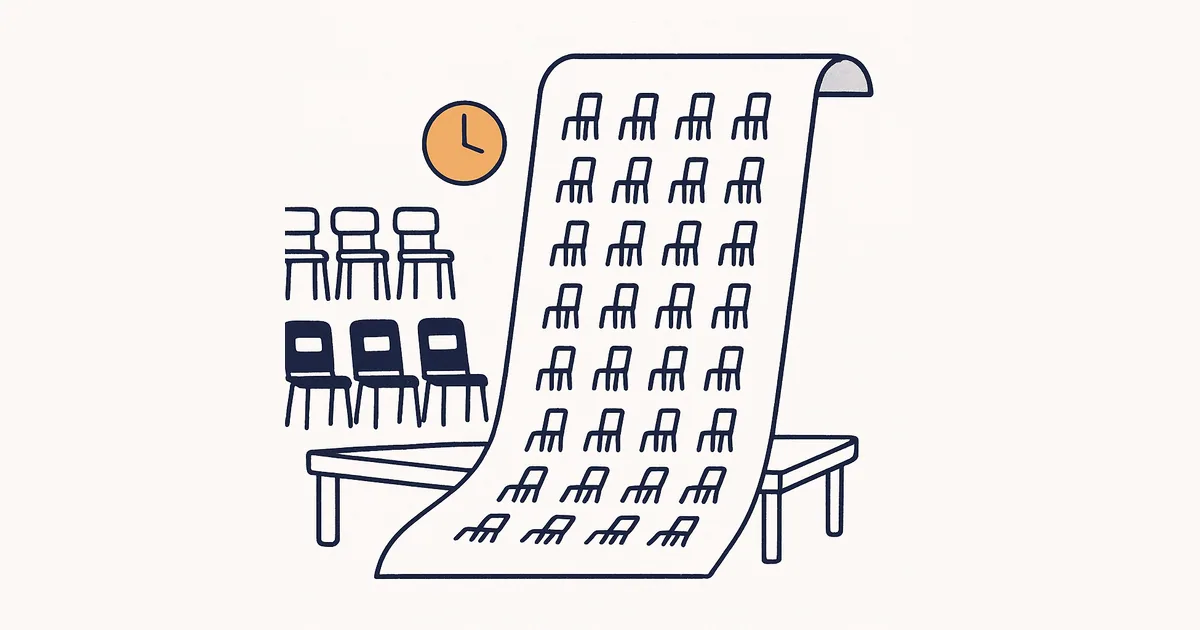
Team subscriptions are the quiet money-savers in every SaaS budget: one admin, one invoice, many seats. Here's what they really are and when they're worth it for your Indian team.
A team subscription means one admin buys every seat and pays one bill instead of many. Transit AI charges ₹2,782 a month ($29) per seat, with no bulk discount. Strava sells yearly codes at ₹6,906 ($71.99) per seat, but only for groups of 250. Omni Group assigns fixed seats through a portal. Transoft rents floating seats for 24 hours at a time. None of these models cut the price automatically.
What you'll learn
- Fixed seats give each member their own login and one invoice
- Floating seats work when nobody uses the software every day
- Four things change when a team buys one plan instead of many
- Team subscriptions are the wrong choice for a very small or shifting team
- How to find every subscription your team already pays for
Fixed seats give each member their own login and one invoice
A fixed-seat team subscription is the simplest model to picture. An admin buys a set number of seats and hands each one to a named person. Omni Group's Omni Accounts works exactly this way. The admin buys seats, on a subscription or a one-time licence, and assigns them through a portal. Nobody shares a login, and Omni doesn't publish a public per-seat price the way some competitors do.
Transit AI runs the same model across three tiers. Operator costs ₹2,782 a month ($29). Pro costs ₹7,578 ($79), and Max costs ₹19,090 ($199), both priced per seat, per month. The admin invites members by email and manages the roster, the billing and any overage from one screen. There's no discount for buying in bulk: the per-seat price stays flat no matter how many seats the admin adds.
A support team on Transit AI's Operator tier gets one login per person. It gets one invoice a month too, instead of separate charges landing on different cards on different days. That's the actual saving on a fixed plan. It isn't the price of the seat. It's the time nobody spends chasing separate people for separate payments.
This model stops paying off the moment headcount moves often. A team that shrinks is still billed for every seat until someone in admin removes the ones nobody needs. Match the tier to what the team is using this month, not what it needed when you signed up. Downgrade a seat the day someone leaves, rather than at the end of the billing cycle. Operator suits a small team doing routine work. Max suits someone needing heavier permissions or support. Paying for Max when Operator would do erases the shared plan's savings.
Floating seats work when nobody uses the software every day
A floating-seat subscription doesn't give anyone a personal seat at all. Instead, a pool of licences sits in the middle, and a member checks one out for a session. Transoft Solutions calls this a Team Subscription Licence. A seat is allocated for 24 hours, then returns to the pool automatically.
That suits a team where the software isn't a daily habit. A tool the team only opens now and then doesn't need a permanent seat for everyone. It needs enough floating licences that someone can usually check one out when they need it.
The trade-off shows up the moment usage stops being occasional. A high-frequency user can find the pool empty at the exact hour they need it. Transoft's own guidance points such users toward a dedicated licence instead of a floating one. Twenty-four hours is also a fixed window. A session that runs long doesn't get extended; it simply expires, and someone has to check the seat out again.
Watch how often the pool actually runs dry before committing to it. If people are regularly locked out, buy them a fixed seat instead and leave the floating pool for everyone else. Running both models on one team at once is normal. It isn't a compromise. Unlike Transit AI, Transoft doesn't publish a price for this floating model here. It only describes the mechanic: a seat, a 24-hour clock, and a pool. That's worth asking a sales team directly before you commit a whole team to it.
Four things change when a team buys one plan instead of many
Four things move from you to an admin when a team signs up together instead of everyone signing up alone: who pays, who manages access, how seats get handed out, and whether the price ever drops for buying more.
| What changes | Team subscription | Individual plan |
|---|---|---|
| Billing | One invoice, one admin | Everyone pays separately |
| Access | Admin adds and removes members from a portal | Each person manages their own account |
| Seats | Fixed or floating, assigned by the admin | One seat, one person, always |
| Volume discount | Rare: Strava's bulk codes cost ₹6,906 a year ($71.99) per seat for groups of 250 | Not offered |
Offboarding shows the difference best. Remove someone from an admin portal and their access ends immediately. Cancel an individual plan yourself, from your own account, and it can sit forgotten for months after you've left the team.
Strava is the clearest volume-discount example among these four, and even it comes with a catch. The admin buys a block of codes, then has to hand each one to a member to redeem themselves. Nobody gets automatically enrolled. For a large, stable club that's a minor chore. In a small team with frequent turnover, handing out codes by hand becomes its own admin job. That's the very thing a shared plan should remove.
None of the four vendors here cut the per-seat price just because a team buys together. Strava's bulk rate only exists at 250 seats, nowhere near what most small teams run. If your team is far from that size, price the individual plan first. Move to a shared plan only once the admin time, not the price, is what you're trying to save.
Team subscriptions are the wrong choice for a very small or shifting team
Team subscriptions stop making sense once a team is small enough that everyone already knows who owns which login. The overhead, a portal, a roster, one person responsible for everyone's access, costs more than it saves at that size. A pair of co-founders sharing a couple of logins already know the arrangement. A shared plan just adds a layer between them and the tool. A team that exists for one project, then disbands, resembles the individual case more than the team case. That's true no matter its current size.
There's a tier problem too. A team plan usually puts everyone on the same tier, and that's a bad fit when needs differ. One founder handles finance and needs advanced permissions. The other only checks a dashboard occasionally, yet both pay for the same features. Someone in that pair is overpaying every month for something they barely use.
Payments and subscriptions get harder to manage, not easier, when a plan locks you into annual billing or a minimum seat count. Strava's bulk codes work that way: sold as a yearly block, which suits a large club that isn't shrinking. It doesn't suit a small startup whose headcount might change before the next renewal.
None of this rules out a shared plan forever. It just means checking seat count and billing terms before signing, not after. If your team's size has held steady for a while, price a shared plan properly. If it hasn't, keep paying individually until it has.
How to find every subscription your team already pays for
Before moving a team onto a shared plan, someone needs an honest list of what's being paid for today. Not what people remember signing up for. A statement can hide a price rise for months if nobody reads it line by line.
- 1Pull the statement from whatever card or account the team already uses for software, if there is one. That's the fastest way to see every subscription on a card in one place.
- 2Check subscriptions on your phone too. On an iPhone, active subscriptions sit under the Apple ID settings; on Android, the Play Store's account menu lists everything billed through it.
- 3Search email for renewal receipts next. Personal tools bought on a personal card, never run through the shared account, only turn up here.
- 4Sort the result into three piles: tools everyone uses, tools one or two people use, and tools nobody remembers choosing. The third pile is usually where the money is, not in switching plan types.
A tracker, free or paid, won't cancel anything for you. It reminds you before renewal, so you decide in time instead of finding out after your card's already been charged. That's true of every subscription tool in this piece, not just one of them.
Once that list exists, the seat-count and billing questions from earlier in this piece get much easier to answer. Without it, any team-versus-individual comparison is just a guess dressed up as a decision.
When RecurStop is the wrong choice
RecurStop is the wrong choice if you want an app to cancel subscriptions for you. It reminds you before a renewal, and you decide.
What to do next
Count your seats and check how often your headcount changes. Price that against what you pay today before you sign anything. RecurStop Teams: know what your company pays for.
Sources
- Team Subscriptions & Licenses - Support - The Omni Group — https://support.omnigroup.com/team-subscriptions/
- Bulk Strava Subscriptions — Team Plans & Volume Discounts — https://www.strava.com/bulk-subscriptions
- Team plans — Transit AI — https://transitai.app/docs/teams/
- How does a Team Subscription License work? — https://helpdesk.transoftsolutions.com/hc/en-us/articles/9144496121491-How-does-a-Team-Subscription-License-work
Frequently Asked Questions
Do team subscriptions cost less than paying individually?
Not usually. Transit AI's cheapest seat costs ₹2,782 a month ($29) whether one team buys ten or one person buys one, so the saving is admin time, not price.
What happens to a seat when someone leaves the team?
On a fixed-seat plan like Omni Group's, the seat stays billed until an admin reassigns or cancels it. On a floating-seat plan like Transoft's, an unused seat simply expires at the end of its 24-hour window.
Can I get a discount for buying more seats?
Rarely. Strava is the one clear example here, and its bulk rate of ₹6,906 a year ($71.99) per seat only applies at 250 members, not at team sizes most small businesses run.
How do I check subscriptions spread across cards, apps and emails?
There's no single list that catches everything at once. You need your card statement, your phone's subscription settings and your email receipts together before you can trust the total.